
 Call Us Now
 8010 44 St SE Calgary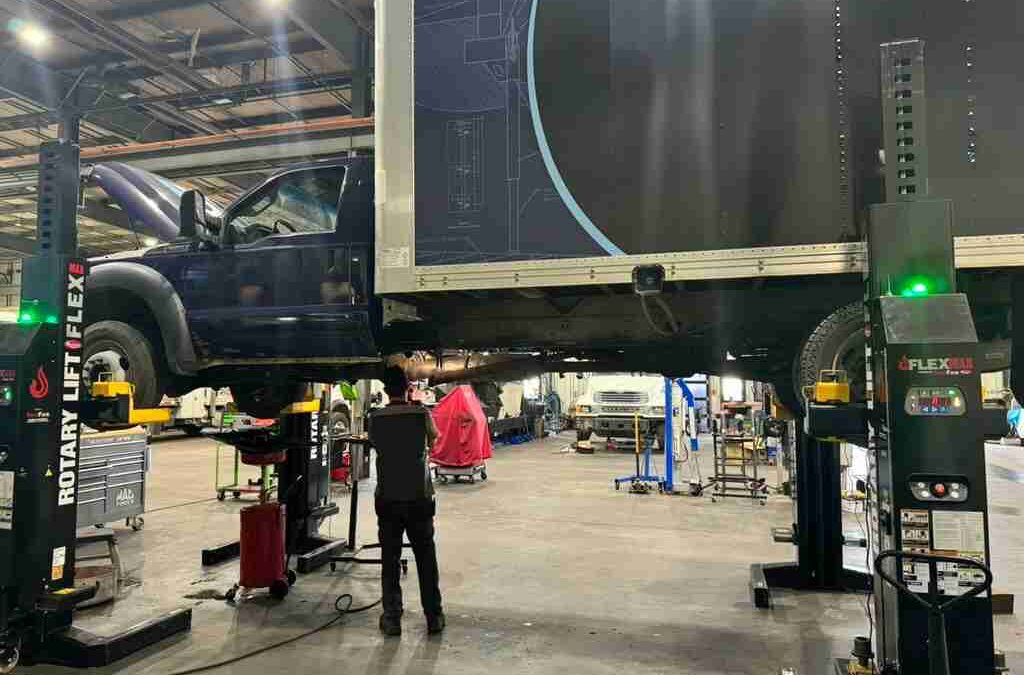
Nobody plans for a truck to die on Glenmore Trail at 6 a.m. It just happens — a warning light that wasn’t there yesterday, a knock that gets louder every kilometre, or the truck simply refusing to start with a full load waiting on it. If you run one truck or fifty, at some point you’re going to need a repair shop that can actually move fast, not just say they can.
Quick Summary: Emergency diesel repair in Calgary generally follows three stages — triage (figuring out what’s actually wrong), a go/no-go decision (fix now vs. tow), and repair. Shops that can shortcut the wait time usually do it with a dedicated diagnostic bay, direct access to parts, and technicians who can read a fault code without guessing. Knowing what to expect — and what information to have ready — cuts hours off the process.
What “Same-Day” Actually Means
“Same-day repair” gets thrown around loosely in this industry, so it’s worth being specific. It doesn’t mean every repair gets finished in an afternoon — a full injector replacement or a transmission rebuild isn’t a same-day job no matter who’s doing it. What it usually means is:
- Your truck gets looked at the same day, not booked out a week
- You get a real diagnosis and a decision — repair, order parts, or tow — within hours, not days
- Simple, common fixes (sensors, belts, hoses, fault-code resets, minor electrical) get finished the same day
At Brandell Diesel, that’s built around an express bay set up specifically for rapid diagnostics — most trucks get assessed within about two hours of arriving, appointment or not.
What Happens When You Call
A shop that handles emergency work well will ask you a short list of questions before you even arrive, because the answers change everything about how they plan the repair:
|
Question |
Why it matters |
|
What warning lights are on? |
Narrows down the system before the truck’s even in the bay |
|
Is the truck drivable or stuck? |
Determines tow vs. drive-in |
|
Any recent work done? |
Rules out a related cause (e.g., a service that wasn’t torqued right) |
|
Engine make and model |
Cummins, Detroit, and Paccar diagnostics all use different tools |
|
Is it under load right now? |
A truck that dies fully loaded needs different handling than an empty one |
Having your fault codes ready — even a phone photo of the dash — saves real time. A lot of “emergency” visits turn out to be a $40 sensor once someone actually reads the code instead of guessing from the symptom.
Triage: The First 30 Minutes
Once the truck is in the bay, a proper triage isn’t just plugging in a scanner and reading whatever pops up. Fault codes point at a system, not always the actual part. A technician doing this right will:
- Pull the codes and cross-reference them against recent history (a recurring code means something different than a first-time one)
- Do a quick visual — leaks, loose connections, obvious damage — before assuming it’s electronic
- Confirm the fix scope before starting, so you’re not blindsided by a bill that grew mid-repair
This is also the point where you find out if it’s a same-day fix or a multi-day one. Be wary of any shop that skips straight to “it needs a new turbo” without walking you through how they got there — that’s usually a sign of the parts-cannon approach rather than actual diagnostics, which is exactly what a proper diagnostic process looks like when it’s done right.
What Drives Emergency Repair Costs Up (and How to Keep Them Down)
Emergency repairs cost more than scheduled ones — that’s just reality, not a shop padding the bill. A few honest reasons why:
- Parts sourcing under time pressure — if a part isn’t on the shelf, rush freight isn’t free
- Diagnostic time — an unknown problem takes longer to isolate than a scheduled service item
- Downtime cost isn’t the shop’s cost, but it drives urgency — and urgency sometimes means paying for expedited work
The best way to keep emergency costs down isn’t during the emergency — it’s beforehand. Trucks that get regular fluid and filter attention rarely land in the emergency bay for the same reasons that neglected ones do. If you’re running more than a couple of trucks, a standing fleet maintenance arrangement also means a shop already has your service history on file — which shaves real time off any emergency visit.
When to Push for a Tow Instead of Driving In
Not every warning light means “pull over now,” but some do. As a rule of thumb:
- Red warning lights (oil pressure, coolant temp, stop engine) — shut down and arrange a tow
- Amber/check engine lights with no performance change — usually safe to drive in, but don’t ignore it for weeks
- Any loss of steering, braking, or a visible fluid leak under the truck — tow, don’t risk it
Continuing to drive on a red warning is the single most common way a $500 fix turns into a $15,000 one.
Key Takeaways
- Same-day usually means same-day diagnosis, not same-day completion for every repair
- Have your fault codes, engine type, and recent service history ready before you call
- A rushed diagnosis that skips straight to “replace this expensive part” is a red flag
- Preventive and fleet maintenance cuts down how often you’re in the emergency bay in the first place
- Red dash warnings mean stop and tow — don’t gamble on making it home
FAQs
Q: How fast can I actually get my truck looked at in Calgary without an appointment?
Most shops running a dedicated diagnostic or express bay can get a truck assessed within a couple of hours, even without a booking — though a scheduled appointment is still faster when your situation isn’t urgent.
Q: Does emergency repair always cost more than a scheduled repair?
Often yes, mainly due to diagnostic time and parts sourcing under pressure — not because the labour rate itself changes. Get a scope confirmed before work starts so there are no surprises.
Q: What should I have ready when I call about a breakdown?
Your engine make/model, any warning lights or fault codes visible, whether the truck is loaded, and whether it’s drivable. This alone can cut significant time off diagnosis.
Q: Can a fleet get priority handling for emergency repairs?
Shops that already manage your service history through a standing fleet arrangement can usually move faster on emergency calls, since they’re not starting from zero on your truck’s background.
Q: Is it ever okay to keep driving with a check engine light on?
Sometimes, briefly — if performance and drivability seem normal. But any red warning light (not amber) means stop and arrange a tow immediately.